Principles of Product Design
Successful design-driven companies building the best products with the strongest design teams have practices in common. These extensively researched core best practices will help your team design better, faster, and more collaboratively. Combined with the power of design thinking, these product design principles with insights from Netflix, Google, Slack, Airbnb, and more will accelerate your team’s design practice.
Upgrade to unlockAlready a member
Available in PDF and epub formats.
All nine books are included with membership, $72 a year.
A look inside
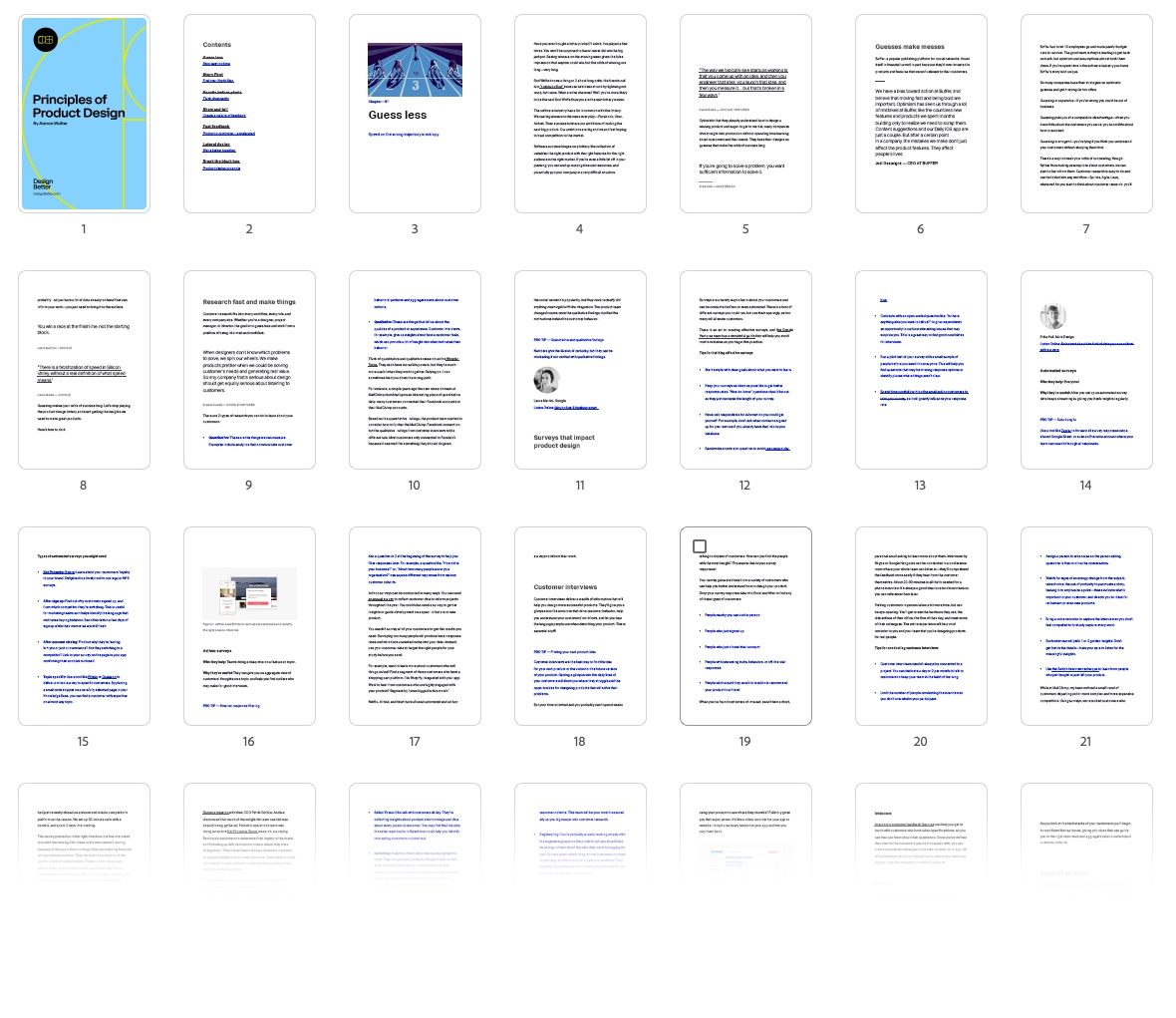
What’s inside
Guess Less
The software industry celebrates stories of lightning-strike success so much, you’d think hunches and risky bets could create unicorns. The best product design teams understand the reality—customer research forms the bedrock of successful products and companies.
Story First
Humans have used stories to foster collective understanding since the beginning. The most powerful designs start with a story—the why—and where your designs fit into people’s lives. Using product stories, journey maps, storyboards, and user personas, teams can build empathy and understanding before designing.
Pencils Before Pixels
Every design begins somewhere, in imperfection. Sketching brings together designers and key stakeholders so they can collaboratively find the best solutions without getting lost in design details.
Show and Tell
When it comes to feedback, there’s little room for polite reserve within a design team. Use design reviews, retrospectives, design standups, and careful space planning to facilitate a culture of feedback within your team—your designs and designers will benefit.
Fast Feedback
Building great products requires an iterative process. The more your team tests their designs through prototyping, the faster you’ll discover needed course corrections or new possibilities. Through building blocks like pattern libraries and user feedback, teams can always design with fresh eyes.
Lateral Design
Your org chart can greatly influence the design process at your company. Bridge gaps between design, engineering, research, product, and others with cross-functional teams, sprints, working groups, and other structural changes that enable better lateral design.
Break the Black Box
As your company and design org mature and scale, it gets harder to maintain the visibility and transparency crucial for great product design. You’ll need to take on streamlining communication, surfacing design within the company, and more big-picture challenges beyond your desk.
About the author

Aarron Walter
Upgrade to access the entire library
Your membership also gets you access to our private Slack of designers, access to bi-weekly Design Club critiques and career discussions, four podcast episodes per month, and our newsletters that go deep into design and the creative process.